
Your Clinical Twin: AI Support Built Around Therapeutic Expertise
Built by a psychologist, Ecko Health is an AI mental health platform designed to reduce admin burden and support continuity of care between sessions.
Designed as an extension of your clinical self, Ecko learns your style and remembers what matters across your caseload.
Our interview with Ecko’s Clinical Lead explores what it means to use AI in a way that strengthens rather than replaces the human side of therapy.
Are our fears of saying 'no' overblown?
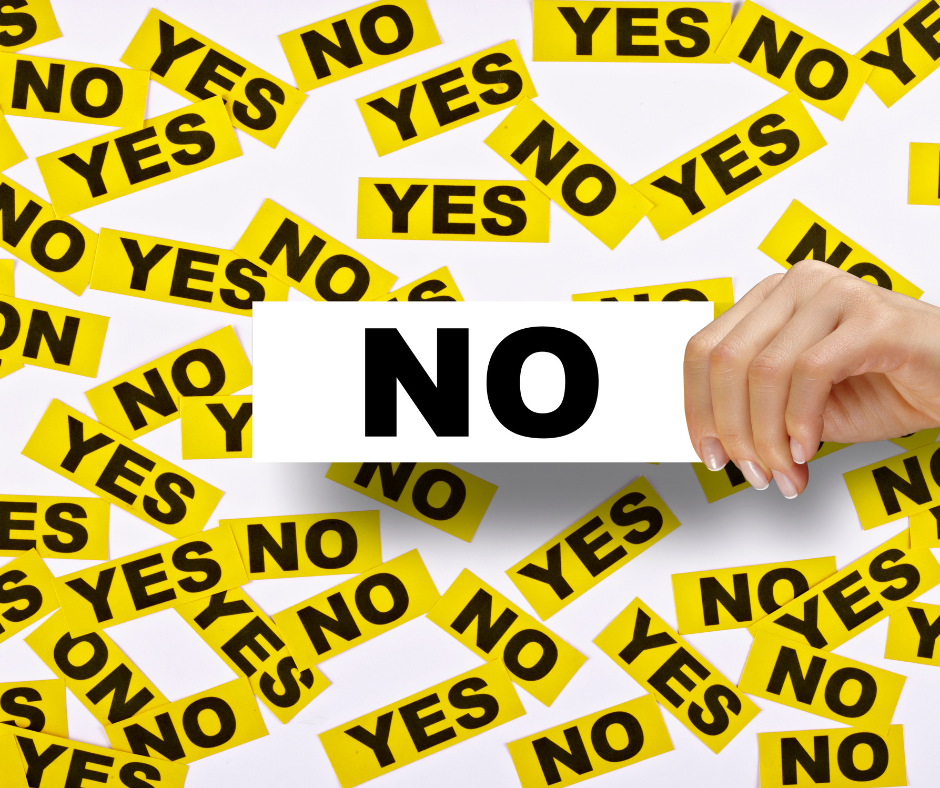
Everyone has been there. You get invited to something that you absolutely do not want to attend – a holiday party, a family cookout, an expensive trip. But doubts and anxieties creep into your head as you weigh whether to decline.
You might wonder if you’ll upset the person who invited you. Maybe it’ll harm the friendship, or they won’t extend an invite to the next get-together.
Should you just grit your teeth and go? Or are you worrying more than you should about saying “no”?
An imaginary faux pas
We explored these questions in a recently published study.
In a pilot study that we ran ahead of the main studies, we found that 77% of our 51 respondents had accepted an invitation to an event that they didn’t want to attend, fearing blowback if they were to decline. They worried that saying no might upset, anger or sadden the person who invited them. They also worried that they wouldn’t be invited to events down the road and that their own invitations would be rebuffed.
We then ran a series of studies in which we asked some people to imagine declining an invitation, and then report their assumptions about how the person extending the invite would feel. We asked other participants to imagine that someone had declined invitations they had extended themselves. Then we asked them how they felt about the rejection.
We ended up finding quite the mismatch. People tend to assume others will react poorly when an invitation isn’t accepted. But they’re relatively unaffected when someone turns down an invite they’ve extended.
In fact, people extending invites were much more understanding – and less upset, angry or sad – than invitees anticipated. They also said they would be rather unlikely to let a single declined invitation keep them from offering or accepting invitations in the future.
We found that the asymmetry between people extending and receiving invites occurred regardless of whether it involved two friends, a new couple or two people who had been in a relationship for a long time.

Why does this happen?
Our findings suggest that when someone declines an invitation, they think the person who invited them will focus on the cold, hard rejection. But in reality, the person extending the invite is more likely to focus on the thoughts and deliberations that ran through the head of the person who declined. They’ll tend to assume that the invitee gave due consideration to the prospect of accepting, and this generally leaves them less bothered than might be expected.
Interestingly, while our research examined invitations to fun events – dinners out to restaurants with a visiting celebrity chef and trips to quirky museum exhibits – other studies have found that the same pattern emerges when someone is asked to do a favor and they decline.
Even with these less enjoyable requests, people overestimate the negative implications of saying no.
Lay the groundwork for future invites
There are a few things you can do to make things easier on yourself as you grapple with whether to decline an invitation.
First, imagine that you were the one extending the invitation. Our research shows that people are less likely to overestimate the negative implications of declining an invitation after they envision how they would feel if someone turned down their invite.
Second, if money is a reason you’re considering passing on a dinner or a trip, share that with the person who invited you – as long as you feel comfortable doing so, of course. Other research has found that people are especially understanding when people cite finances as their reason for declining.
Third, consider the “no but” strategy that some therapists suggest. Decline the invitation, but offer to do something else with the person who invited you.
With this method, you’re making it clear to the person who invited you that you’re not rejecting them; rather, you’re declining the activity. A bonus with this strategy is that you have the opportunity to suggest doing something that you actually want to do.
Of course, there’s a caveat to all of this: If you decline every invitation sent your way, at some point they’ll probably stop coming.
But assuming you aren’t a habitual naysayer, don’t beat yourself up if you end up declining an invitation every now and then. Chances are that the person who invited you will be less bothered than you think.
Julian Givi, Assistant Professor of Marketing, West Virginia University and Colleen P. Kirk, Assistant Professor of Marketing, New York Institute of Technology
This article is republished from The Conversation under a Creative Commons license. Read the original article.
Want to read more great articles?
See following link to check out a fascinating collection of psychology articles by leading academics and researchers.
This Psychology Symbol - Vintage Retro Striped Sunset T-Shirt is available from Amazon (prime eligible) in a range of colors for women and men. Sales help support this website, which has been providing free and comprehensive information and resources for psychology students and educators since 2008.

Recent Articles


-
Nihilist Penguin: Origin, Meaning, and Psychology
May 22, 26 11:54 AM
 What is the nihilist penguin? Discover the origin of the viral clip, what it really shows, and why people read it as a symbol of despair, freedom, and walking away.
 -
Psychology Articles by David Webb
May 22, 26 11:15 AM
 Discover psychology articles by David Webb, featuring science-based insights into why we think, feel, and behave the way we do.
 -
Sponsor a Psychology Website with Over a Million Yearly Visitors
May 22, 26 06:49 AM
 Showcase your brand to a huge, engaged audience. Discover how to sponsor a psychology website trusted by over a million visitors a year.
Know someone who would love to read Are our fears of saying 'no' overblown? Share this page with them.
Please help support this website by visiting the All About Psychology Amazon Store to check out an awesome collection of psychology books, gifts and T-shirts.
 |
 |
Go From Are our fears of saying 'no' overblown? Back To The Home Page